

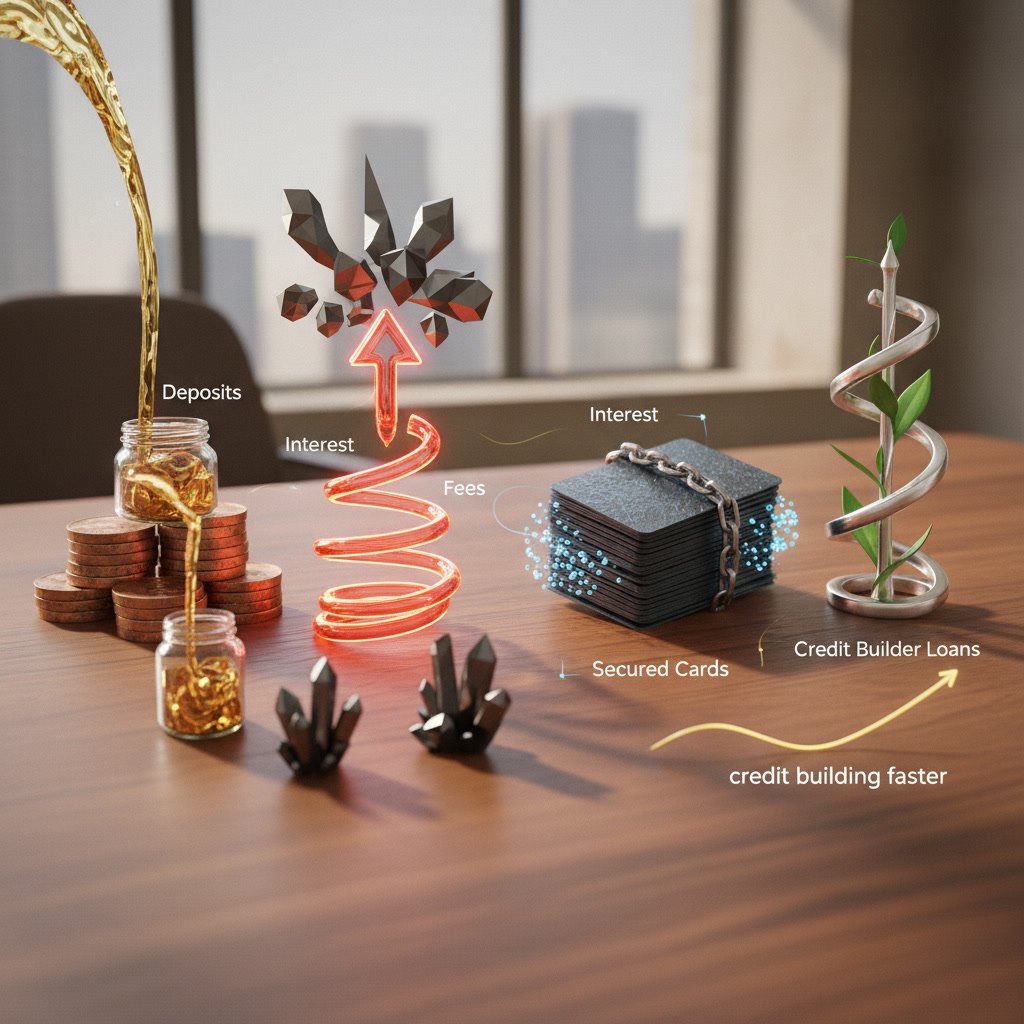
Both secured credit cards and credit builder loans can add positive payment history to your credit report within 30 to 60 days, but secured cards typically build credit faster because they report monthly and allow you to control your utilization ratio. Credit builder loans report monthly payments but don’t improve your utilization until the loan closes, making them slower to impact your score. The best choice depends on whether you need immediate purchasing power or prefer a forced savings structure.
When comparing credit building tools, speed matters less than consistency. Both products work, but they function differently and serve different financial habits.
Why Building Credit Requires Reported Payment History
Your credit score relies heavily on payment history, which makes up 35 percent of your FICO score. Both secured cards and credit builder loans create this history by reporting your monthly payments to the three major credit bureaus: Experian, Equifax, and TransUnion.
Without reported accounts, you remain credit invisible. Even perfect financial behavior won’t build a score if lenders never see it. That’s why choosing a product that reports to all three bureaus is critical, not just one or two.
How Secured Credit Cards Build Your Score
A secured credit card requires a refundable cash deposit that typically becomes your credit limit. If you deposit $500, you get a $500 limit. The card issuer holds your deposit as collateral, which reduces their risk and allows them to approve applicants with poor or no credit history.
Once approved, you use the card like any other credit card. Your issuer reports your balance and payment status every month. As long as you pay on time and keep your balance below 30 percent of your limit, your score improves. Many users see a 20 to 40 point increase within three to six months of responsible use.
The speed advantage comes from utilization reporting. Credit utilization accounts for 30 percent of your FICO score. With a secured card, you control this ratio every month by adjusting your spending and payments. Paying your balance down before the statement closing date keeps utilization low and signals responsible credit management.

How Credit Builder Loans Work Differently
A credit builder loan flips the traditional loan structure. Instead of receiving money upfront, the lender holds your loan amount in a locked savings account. You make monthly payments, and once the loan is paid off, you receive the full amount minus any fees or interest.
These loans typically range from $300 to $1,000 with terms between six and 24 months. Each payment gets reported to the credit bureaus, building your payment history just like a secured card.
The limitation is that credit builder loans don’t affect your utilization ratio during the loan term. They’re installment loans, not revolving credit. Your utilization only improves if you use the funds at loan maturity to pay down existing credit card debt. Until then, you’re only building payment history, which takes longer to move your score significantly.
Speed Comparison for Texas Residents
In Texas, both products report to credit bureaus at similar intervals, but the impact timeline differs. Secured cards can boost scores within 60 to 90 days if you maintain low utilization and perfect payments. Credit builder loans take four to six months to show noticeable improvement because they only add payment history without addressing utilization.
If you’re working toward a specific goal like qualifying for mortgage loans, secured cards offer faster visible progress. Lenders reviewing your credit see both positive payment history and responsible credit usage, which strengthens your profile more quickly than installment loan history alone.
Cost Analysis: Deposits, Interest, and Fees
Secured cards require an upfront deposit you’ll eventually get back, usually after 12 to 18 months of responsible use when the issuer graduates you to an unsecured card. Many secured cards charge annual fees between $25 and $49, plus interest on any balance you carry month to month.
Credit builder loans charge interest, typically between 6 and 16 percent APR. On a $500 loan over 12 months at 10 percent APR, you’ll pay about $27 in interest. Some lenders also charge origination fees or monthly maintenance fees.
The real cost difference appears in opportunity cost. With a secured card, your deposit sits idle but you gain purchasing power. With a credit builder loan, you pay interest on money you can’t touch until the term ends. If you already have an emergency fund, the secured card makes more financial sense.
Which Product Fits Your Financial Habits
Secured cards reward discipline. If you can resist overspending and pay your balance in full each month, they build credit quickly while giving you a safety net for emergencies or planned purchases.
Credit builder loans work better for forced savers. If you struggle with impulse spending or want to build savings while building credit, the locked structure prevents access until you complete all payments. You’re essentially paying yourself while establishing credit history.
Your choice should match your behavior patterns. A secured card in the wrong hands becomes a debt trap. A credit builder loan in the hands of someone who needs immediate credit access delays their goals unnecessarily.
Using Both Tools Together for Maximum Impact
Combining a secured card with a credit builder loan creates a diversified credit profile faster than using either alone. Credit scoring models reward account variety, and having both revolving credit and an installment loan shows lenders you can manage different credit types.
Start the credit builder loan first to lock in your savings commitment. Two months later, open a secured card with a small deposit. Use the card for one or two recurring bills, set up autopay, and let both accounts report simultaneously. This strategy can improve scores 30 to 50 points faster than a single product approach.
Just ensure both products report to all three bureaus. Some credit unions only report to one or two, which limits your progress. Always confirm reporting practices before opening any credit building account.
Common Mistakes That Slow Your Progress
Maxing out your secured card every month destroys the utilization benefit. Even if you pay it off, high reported balances hurt your score. Keep your balance below 10 percent of your limit for the best results, or pay it down before your statement closes.
Missing even one payment on a credit builder loan erases months of progress. These loans have no grace period for your credit report. A 30-day late payment stays on your report for seven years and can drop your score 60 to 110 points depending on your starting position.
Opening too many accounts at once triggers multiple hard inquiries and lowers your average account age. Space out applications by at least 90 days unless you’re combining a secured card and credit builder loan as part of a deliberate strategy with professional guidance from credit repair specialists.

When to Upgrade or Transition to Unsecured Credit
Most secured card issuers review your account every six to 12 months. If you’ve made on-time payments and kept utilization low, they’ll either graduate you to an unsecured card or increase your limit without requiring an additional deposit.
After completing a credit builder loan, use the funds strategically. If you have credit card debt, pay it down to improve utilization. If your credit cards are already clear, deposit the funds into savings and apply for a traditional personal loan or unsecured credit card to continue building your profile.
The transition from credit building tools to mainstream credit products typically takes 12 to 18 months of consistent positive behavior. During this time, avoid new negative marks and maintain the habits that built your score initially.
Your Next Step Toward Stronger Credit
Secured cards build credit faster for most people because they address both payment history and utilization simultaneously. Credit builder loans work best as a secondary tool or for those who need forced savings discipline. Combining both accelerates progress but requires careful management to avoid missed payments or overspending.
Quick Tax and Credit Solutions Florida has helped Texas clients navigate these decisions for over 20 years, matching credit building strategies to individual financial situations and goals. Whether you’re working toward better loan terms, planning for a major purchase, or rebuilding after financial setbacks, the right combination of tools makes all the difference. Reach out to discuss which approach fits your timeline and budget at +1 (214) 647-1669.